EXECUTIVE SUMMARY:
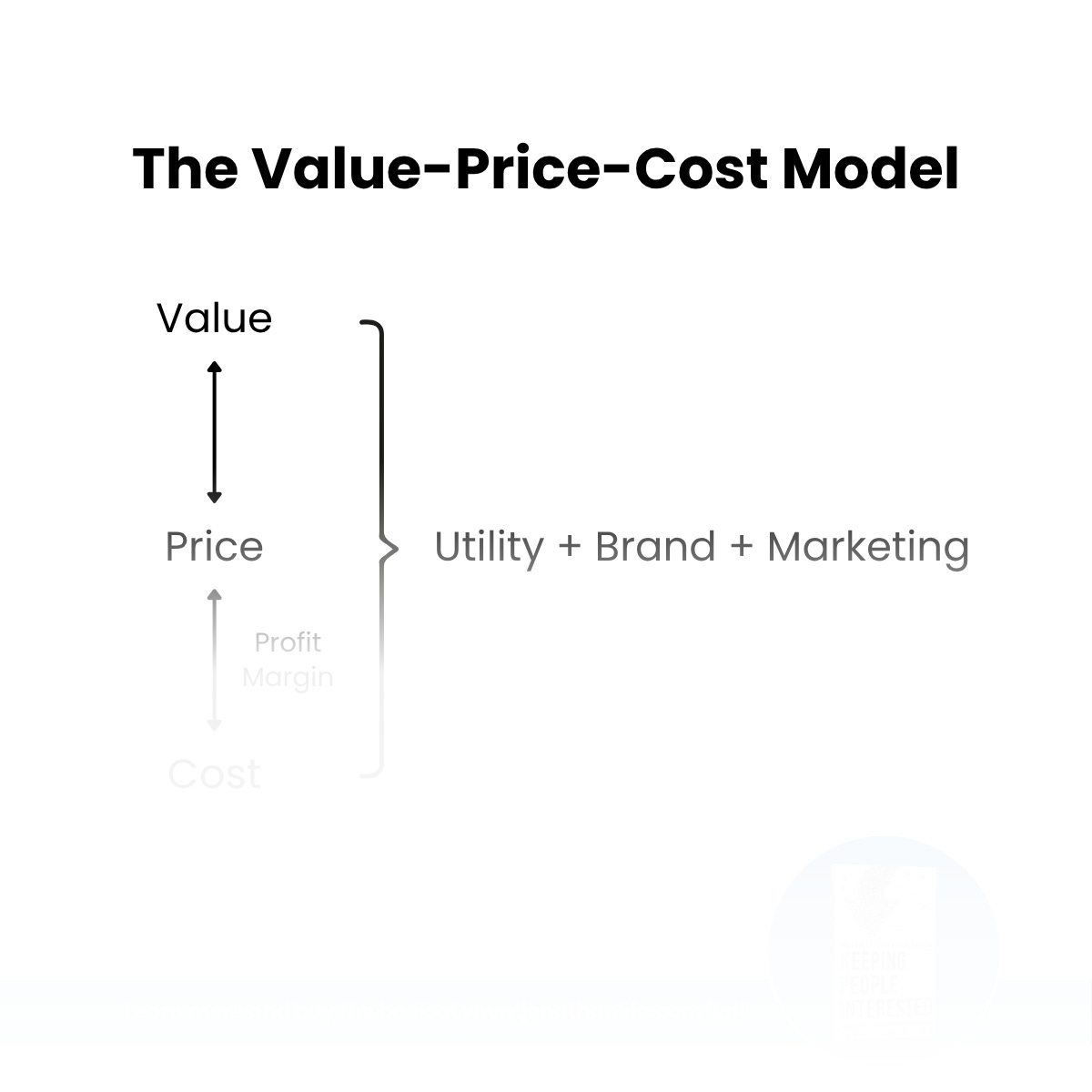
The Value-Price-Cost Model explains the relationship between what a product costs to make, what you charge for it, and what the customer believes it is worth. For a purchase to happen, perceived value must exceed price, and profit is the gap between price and cost of goods sold. Perceived value is made up of three parts: the product’s tangible utility, the intangible brand, and the intangible marketing. Because branding and marketing raise perceived value without changing the product itself, they can both convert customers who would not have bought and support higher prices without hurting satisfaction.
Two products can be functionally identical and still sell at wildly different prices. The gap in price point is explained by more than just markup. It comes down to what customers believe a product is worth before they ever see the price tag. Understanding how that perception gets built, and how much of it you actually control, is one of the most useful things a business owner can learn.
Consistency Is Key
Good storytelling must be consistent across every customer touchpoint. Whether someone sees your social media post, reads your website’s About page, or speaks with your customer service team, they should feel they are experiencing the same narrative. Consistency builds familiarity, familiarity builds trust, and trust is the foundation of long-term brand loyalty.
In the context of keeping people interested, storytelling is the bridge between understanding a customer’s lived experience and showing how your brand fits naturally into it. This turns a basic transaction into an ongoing relationship and allows a product to become part of someone’s identity.
When storytelling is done well, customers are not only more likely to buy from you, but they are also more likely to share your story with others. They become advocates who extend your brand’s reach far beyond what you could accomplish on your own.
Storytelling creates the emotional connection that draws people in, but a strong brand must also deliver on the practical side of the equation.
The Value-Price-Cost Model
To truly sustain growth, you must align your story with the tangible and intangible values you provide. This is where the Value-Price-Cost (VPC) Model comes in.